
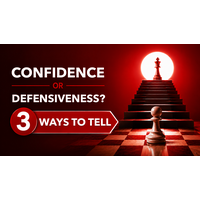
Every entrepreneur believes in their company. They have to. Building a startup requires conviction, resilience, and the ability to push through uncertainty. But during pitches and due diligence conversations, an important distinction often separates the strongest founders from the rest: confidence versus defensiveness.
At first glance, they can look similar. Both entrepreneurs speak with conviction. Both stand behind their vision. The difference becomes clear when their ideas are challenged.
Here are three signs you can watch for.
1. Confident Entrepreneurs Welcome Tough Questions
Confident entrepreneurs understand that investor questions are not an attack on their idea or business model. They see them as opportunities to clarify their thinking and strengthen their case.
Defensive entrepreneurs, on the other hand, often react emotionally. They may dismiss concerns, become argumentative, or rush to justify every decision.
A leader who can calmly engage with difficult questions signals maturity and coachability—two traits that often become critical as companies scale.
2. Confident Entrepreneurs Acknowledge What They Don't Know
No startup founder has all the answers. Markets change, customers surprise you, and assumptions are constantly tested.
Confident entrepreneurs are comfortable saying, "We haven't solved that yet," or "That's an area we're still exploring."
Defensive founders often feel pressured to appear certain about everything. The result is overexplaining, exaggeration, or answers that seem disconnected from reality.
Ironically, admitting uncertainty often builds more investor confidence than pretending uncertainty does not exist.
3. Confident Entrepreneurs Separate Feedback from Identity
When investors challenge a strategy, pricing model, or go-to-market plan, confident leaders evaluate the feedback objectively. They can disagree without becoming personally attached to the debate.
Defensive founders frequently interpret criticism of the business as criticism of themselves.
Early-stage companies require constant adaptation. Leaders who can absorb feedback without taking it personally are often better equipped to navigate the inevitable setbacks ahead.
The Bottom Line
Confidence is rooted in self-awareness. Defensiveness is rooted in protection.
One entrepreneur says, "Help me see what I'm missing." The other says, "Let me explain why you're wrong."
The distinction between the two types above matters a lot to investors. Markets evolve, products pivot, and strategies change. A founder's ability to learn, adapt, and engage openly may ultimately be a stronger predictor of success than the pitch itself.