

If you're actively investing in early-stage deals, you're probably reviewing dozens or hundreds of pitches and applications every month. Most don't make the cut. And most of those entrepreneurs walk away with a templated rejection or nothing at all.
That's a missed opportunity hiding in plain sight. Because in a world where your next great deal could come from an entrepreneur who just wasn't ready yet, letting those relationships go cold is a cost that rarely shows up on a spreadsheet — but always shows up eventually.
Guess who can help you handle such situations – Artificial Intelligence! Yes, you can use AI to handle deals that are promising on paper but need a bit of time and guidance to achieve their true potential.
The Hidden Cost of a Cold "No"
Rejection is an unavoidable part of the investment process. Not every entrepreneur is ready, not every business fits the thesis, not every pitch lands at the right time.
But here's the problem: you don’t need to shut the door to entrepreneurs; instead, establish a conversation and keep tabs on their growth journey.
Consider the math. If you decline 100–150 applicants per month, and even 20% of those entrepreneurs go on to build something fundable within 18 months, you've just quietly passed on a meaningful slice of future deal flow — without ever knowing it.
The opportunity cost isn't just financial. It's relational. And in angel investing, relationships are everything.
Turning Rejections Into a Relationship Funnel
Think of it this way: your pool of declined applicants is essentially a warm audience that has already raised its hand. They found you, were enthusiastic about approaching you, and put real effort into their pitch. That effort counts as something.
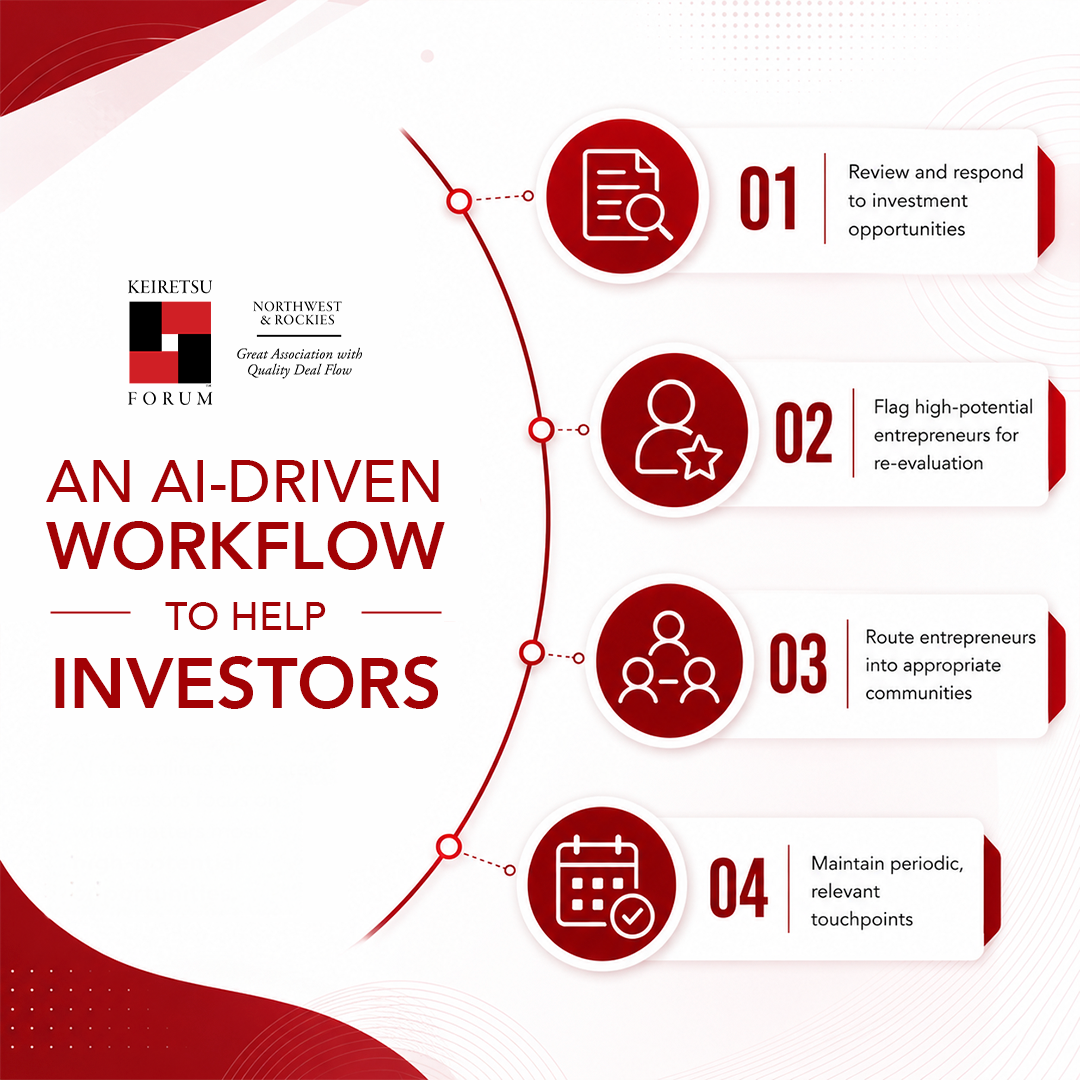
With the right AI-driven workflow, you can:
- Acknowledge and explain the decline in a personalized, sector-specific way
- Route applicants into appropriate programs or communities based on their stage and profile
- Maintain periodic, relevant touchpoints, so you stay top of their mind as they grow
- Flag high-potential applicants for re-evaluation when their profile evolves
This isn't about lowering your investment standards. It's about being deliberate with the relationships you're already passively building — and making sure they don't quietly walk out the door.
How Angel Investors Can Start Integrating AI Into Their Deal Flow Today
The good news is that you don't need to overhaul your entire operation to start seeing results. The most effective AI integrations in investor workflows tend to start small, solve a specific friction point, and expand from there. Here's where to begin:
Start with your intake process. The first place AI delivers immediate value is at the top of the funnel. Tools that can automatically screen, score, and categorize incoming pitch applications — based on sector fit, stage, team composition, and market size — free your team from spending hours on submissions that were never going to be a fit. More importantly, they ensure that the applications that do deserve a closer look don't get buried.
Automate your decline communications — but make them personal. AI can generate decline responses that are specific to each applicant's submission — referencing their actual sector, stage, or gap — without anyone on your team having to write a single word. The entrepreneur feels heard. Your team saves hours. And the relationship stays warm.
Build a re-engagement pipeline for high-potential declines. Not every "no" is a permanent no. Set up an AI-driven workflow that flags declined applicants worth watching — perhaps they're pre-revenue today but operating in a sector you're bullish on — and schedules a light touchpoint every quarter. A brief, relevant check-in at the right moment can bring a promising entrepreneur back into your active pipeline.
Use AI to stay on top of your existing network. Beyond declined applicants, AI can help you track signals across your broader ecosystem — monitoring news, funding announcements, and milestone updates for founders you've previously engaged with. Instead of relying on entrepreneurs to update you, your system proactively surfaces the right conversations.
Let the data tell you where your thesis is drifting. Over time, AI can analyze patterns across your declined and accepted deals to surface insights you'd never spot manually — which sectors you're consistently passing on, what stage commands the most attention, and where your conversion rates are strongest. That kind of portfolio intelligence helps you make sharper, faster decisions as deal volume grows.
The key principle across all of these: AI works best in your workflow, not as a replacement for your judgment, but as the infrastructure that makes sure your judgment is applied to the right opportunities, at the right time, with the right context.
The Bottom Line
A declined pitch is not a dead end. It's a data point, a starting point, and — handled well — the beginning of a relationship that could pay dividends for years.
The investors who recognize this and build the AI-powered infrastructure to act on it will have a pool of active deals delivering good returns and a pipeline of high-growth potential deals that will deliver good returns in a few years.